


An interview with Stefan Sellner, the new director of the IBN, about his vision and goals
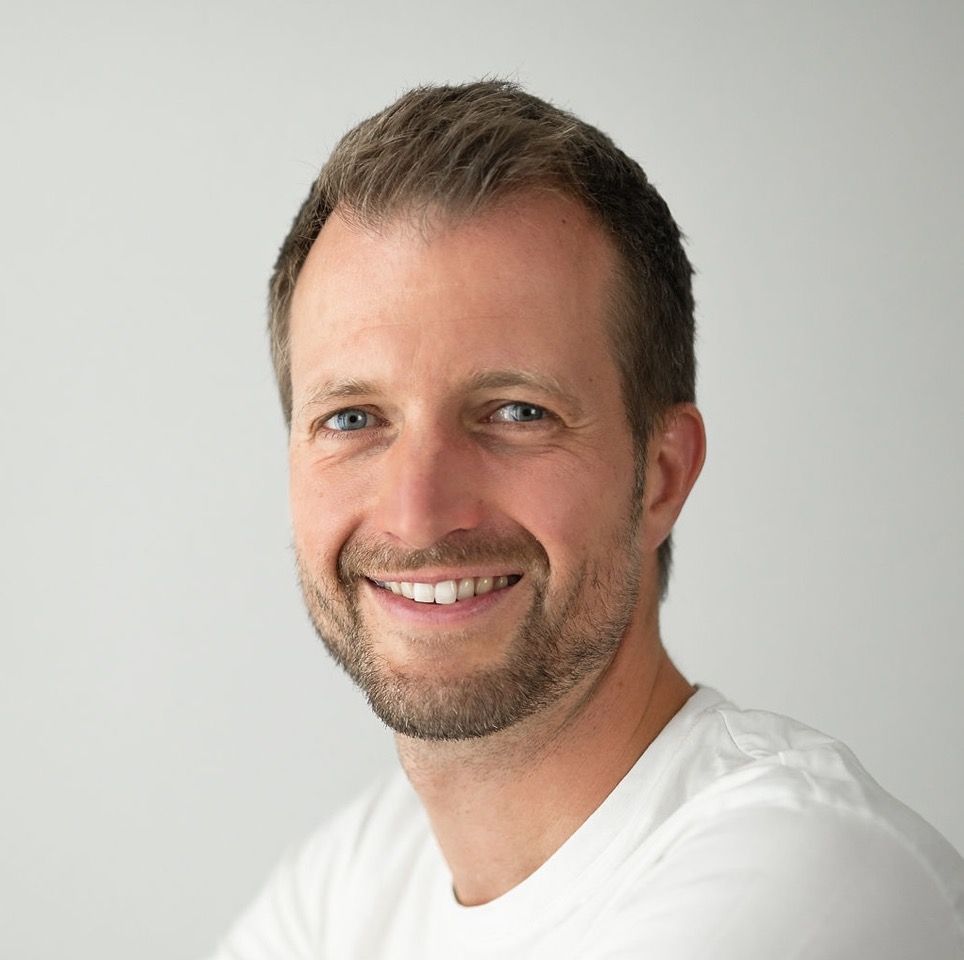

Stefan, you will take over as director of the IBN at the beginning of 2026. How did this come about?
I have been involved with the IBN for a long time. I trained as a Building Biology Consultant IBN and started my own consulting office. Over the years, I have come to understand the importance of the institute for people interested in healthy buildings and lifestyles. When Winfried asked me to take over his role as director, we had open and honest discussions without time constraints. It quickly became clear to me that this is not just any position, but rather a significant responsibility. That is exactly how I see this step. I see this task as a great opportunity, and I am very grateful for the trust placed in me. I do not take this for granted. I am aware of my responsibilities toward the institute, the community, and the holistic concept of building biology.
Why did you decide to take on this task?
I have a background in construction. I worked in the field for many years, supervising construction sites and guiding homeowners and builders through complex decision-making processes. As a carpenter, civil engineer, and building biology professional, I have experienced construction from different perspectives, especially at the intersection of theory and practice on construction sites, and in direct contact with people. These experiences have taught me that buildings are not merely the result of technologies, standards, and materials. Rather, they are the result of decisions often made under uncertainty, time constraints, and emotional stress. I have learned that the quality of the questions is more important than the number of answers. The quality of a construction site – and often the quality of life in the resulting home – is determined early on by the questions asked. Building biology helps us ask the important questions. It provides a framework for making decisions in a more conscious, intelligent, and humane way. Instead of providing cookie-cutter answers, I create spaces where good decisions can be made. I would like to carry this understanding forward and strengthen it at the IBN.
Today, the whole world is striving for sustainability and climate protection. Is there still a need for building biology and the IBN?
Building biology is precisely what is needed. Currently, sustainability is largely discussed in terms of key figures, CO2 balances, and efficiency. While these are important, this approach falls short when the human aspect is overlooked. Healthy spaces, non-toxic materials, a good indoor climate, and long-term usability are not secondary issues – they form the foundation of truly sustainable buildings. Building biology takes a holistic view of sustainability. It doesn’t just ask: What saves energy? It also asks: What is good for people? At the same time, the world has changed. Construction processes have become more complex.
Information is everywhere, but guidance is not.
I see the IBN’s role as providing practical, responsible, and easy-to-understand guidance in this area, all while avoiding polarization. To me, this also means opening a dialogue with related fields, such as health care, wherever building, living, and health intersect.
Where are building biology professionals needed most today?
They are needed wherever people want to exceed minimum technical standards when building, renovating, or designing spaces. There is a great need for guidance during the initial decision-making stages, particularly among builders seeking direction, planners aiming to adopt a more holistic approach, and tradespeople eager to understand quality in terms of health and craftsmanship. Building biology professionals can play an important role as translators, bridging the gap between specialized knowledge and its application in everyday life. They are not know-it-alls, but rather guides. At its core, building biology is about the relationship between people and their living and work environments – places where we spend much of our lives.
How do you see your role as director of the IBN?
I see my main task as building connections and community. The IBN has enormous technical depth, experience, and knowledge, as well as a strong network. Rather than recreating all of that, I facilitate connections between theory and practice, education and application, and the institute and the community. The IBN should remain an independent, neutral authority. It should be a place for education, exchange, and classification. To this end, I aim to create environments where knowledge can flourish.
What is important to you in your relationship with the IBN community?
Respect and openness. The IBN thrives on the involvement of its people, including graduates, consulting offices, instructors, and partners. Their knowledge and experience form the foundation of the institute. I want to promote open exchange, mutual learning, and a willingness to collaborate on developments. Building biology has never been a rigid system. It has always been a process, and it should continue to be viewed as such.
My vision
In conclusion, my vision is to build for future generations using durable, honest materials with a clear focus on health and well-being. Buildings should be places where people can relax, not cookie-cutter houses. This requires slowing down, focusing on quality, and taking responsibility. It also means combining the knowledge of the past with today’s possibilities instead of constantly trying to reinvent the wheel. Building is not a purely technical process. It is a cultural act. Therefore, building is always a matter of responsibility – for the people who live and work in buildings, for the environment in which they are built, and for those involved in their construction. If we take this responsibility seriously, we will create lasting buildings. Buildings that do good.
Comment
By Winfried Schneider, director of the IBN from 2010 to 2025
After many years in charge of the IBN, I am handing over the leadership of the institute. Stefan Sellner, a Building Biology Consultant IBN who knows the institute well and is passionate about building biology in construction and consulting, is taking over and will continue to run the IBN with expertise and empathy.
Society, the economy, politics, and the media are all undergoing profound changes worldwide. While these changes present significant challenges for the IBN, they also present great opportunities. During this time of change, it is crucial that we work together to raise awareness of building biology as an integral part of achieving an ecologically, economically, and socially sustainable future.
It was important to me to prepare for this transition well and ensure that the IBN was handed over during a period of stability. To ensure continuity and reliability, I will support the transition in the background.
My sincere thanks go to Stefan Sellner. I wish him and the IBN every success and all the best in their future endeavors!
This is a translation of “Stefan Sellner, neuer Geschäftsführer des IBN: Interview über seine Visionen und Ziele“
Translator
Katharina Gustavs is a Building Biology Professional in Victoria, Canada, who translated the Building Biology Online Course IBN.
info@katharinaconsulting.com | katharinaconsulting.com
Ihre Stimme zählt
Kommentarregeln:
Wir sind neugierig, was Sie zu sagen haben. Hier ist Raum für Ihre Meinung, Erfahrung, Stellungnahme oder ergänzende Informationen. Bitte beachten Sie bei Ihrem Kommentar folgende Regeln:
- Bitte keine Fragen: Auf dieser kostenlosen Informationsplattform können wir keine Fragen beantworten - bitte stellen Sie Ihre Fragen direkt an unsere Autor*innenAutor*innen.
- Bitte keine Werbung: Gerne können Sie auf Ihre Produkte/Dienstleistungen mit einem Werbebanner aufmerksam machen.

Wie werde ich
Baubiolog*in IBN?
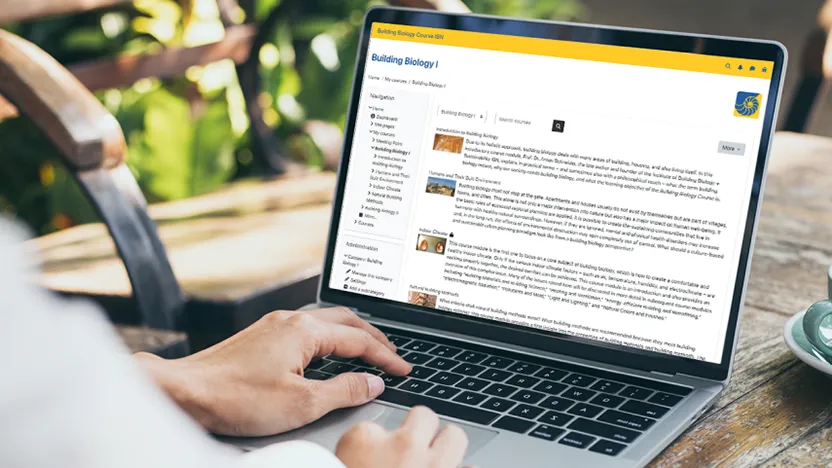
How to become a Building Biology Consultant IBN?
Newsletter

„Aktuelles aus der Baubiologie“
Die Baubiologie entwickelt sich stetig weiter: neue Erkenntnisse aus Praxis und Wissenschaft, innovative Materialien, Methoden und Projekte, spannende Veranstaltungen und Publikationen ... Wir bleiben dran und bündeln die interessantesten Neuigkeiten monatlich in unserem kostenlosen Newsletter.Nachhaltig weiterbilden
Know-how, Zusatzqualifikationen und neue berufliche Möglichkeiten für Baufachleute sowie alle, die sich für gesundes, nachhaltiges Bauen und Wohnen interessieren.
Unser Kompetenz-Netzwerk
Hier finden Sie unsere qualifizierten Baubiologischen Beratungsstellen und Kontakte im In- und Ausland nach Standort und Themen sortiert.
Über die Baubiologie
Die Baubiologie beschäftigt sich mit der Beziehung zwischen Menschen und ihrer gebauten Umwelt. Wie wirken sich Gebäude, Baustoffe und Architektur auf Mensch und Natur aus? Dabei werden ganzheitlich gesundheitliche, nachhaltige und gestalterische Aspekte betrachtet.
25 Leitlinien
Für einen schnellen, aufschlussreichen Überblick haben wir in 25 Leitlinien der Baubiologie die wichtigsten Parameter herausgearbeitet, sortiert und zusammengefasst. In 15 Sprachen, als PDF oder als Plakat erhältlich.

























0 Kommentare