

Excavated earth – the new raw material

The reuse of excavated materials in earth construction is becoming increasingly important. This topic is addressed in my thesis: “wasted ground – Die Potenziale von Aushub im Lehmbau [The Potential of Excavated Materials in Earth Construction].”
Historically, the reuse of excavated materials was common practice. The variety of earth construction techniques in Germany, ranging from half-timbered houses in the Black Forest to houses with unfired clay bricks in northwestern Germany, was influenced by the availability of local materials. However, industrialization largely displaced earth construction, which has since been used primarily in times of need. For example, after World War II, entire settlements were built using rammed earth. Despite their rapid construction, these settlements still stand today.
Currently, awareness of sustainable and regional building materials is growing again. Supply bottlenecks, raw material shortages, and high energy prices are prompting a resurgence in the global construction industry. In addition, modern processing techniques and logistical advances are opening up new possibilities for the reuse of excavated soil in earth construction, overcoming previous limitations in building material production.
Excavated earth as backfill
In 2023, the German Substitute Building Materials Ordinance (EBV) was introduced to approve the reuse of excavated materials under certain conditions, thus facilitating its use in construction.
According to the Federal Association of Building Materials (Bundesverband Baustoffe e. V.), 122.1 million tons of excavated earth were generated in Germany in 2022, which is equivalent to about five million truckloads. About 85% of this material was reused in surface mining, primarily for backfilling gravel pits, sand pits, and other excavation sites. However, mixing loamy excavated material with other soils renders it unusable for earth construction. Some sectors of the building materials industry use excavated materials for road and earthworks construction, as well as for producing concrete and asphalt. The focus is mainly on recycling aggregates, though clay is largely left unused.
Clay as a building raw material
Although the varying composition of clay is often cited as a disadvantage, it is actually a strength of the raw material. Its versatility enables a broad range of applications in the production of building materials and allows for different processing consistencies. This unique potential must be utilized efficiently and sustainably. However, decades of neglect have left a gap in research on systematically testing building clay. While testing methods for clay building materials are nearly state of the art and widely applicable, more research is needed on testing the suitability of building clay. Many assume that simple manual tests suffice to assess the suitability of excavated material for earth construction. In an industry based on quantifiable data, however, such approaches are often insufficient. While manual tests based on empirical values can provide initial assessments, they lack the depth necessary to understand this complex material. Thorough, verifiable material testing is essential for developing clay building materials and ensuring the sustainable and appropriate use of the raw material.

Excavated material at a construction site
Excavated material as waste at a landfill
Clay-rich soil layers
Clay as a lab sample1 Excavated material at a construction site2 Excavated material as waste at a landfill3 Clay-rich soil layers4 Clay as a lab sample
Reusing excavated materials
The reuse of excavated materials in earth construction is becoming increasingly important, involving two main approaches. Some pilot projects test on-site reuse, while other manufacturers process locally excavated materials into clay building products for sale.
One such project is the Weleda Logistics Center in Schwäbisch Gmünd. The high-bay warehouse features 8 meter (26 feet) high rammed earth walls made of 3,000 cubic meter (106,000 cubic feet) of excavated material. Christof Ziegert, an earth construction expert from ZRS Ingenieure GmbH, developed the formula and performed regular quality control checks on the rammed earth. Jörg Meyer (Conluto) processed the material on site using a mobile mixer that he designed. This setup enabled the efficient mixing of the earth and aggregates, which were then poured into the formwork in layers and compacted with pneumatic tampers. This project stands out for its innovative use of regional materials and sustainable building methods.
In Lower Austria, a model home designed by Andi Breuss, an Austrian earth construction expert, showcases the versatility of using excavated material. The house consists of a specially developed wood-clay composite system and makes extensive use of excavated material. In the wall assembly, carefully coordinated layers of clay ensure optimal interaction with the timber structure with regard to fire and sound insulation, vapor permeability, thermal mass, and thermal insulation. The concept is complemented by the use of clay fill, screed, and plaster, resulting in an impressive variety of sustainable building materials utilized with minimal energy consumption.
In the growing earth construction industry, the large-scale reuse of excavated materials shows promise.

Earth mixer by Jörg Meyer for on-site processing
Rammed earth construction at the Weleda Logistics Center
Clay as a versatile building material in Andi Breuss’s model home
Production of wall elements in a horizontal position5 Earth mixer by Jörg Meyer for on-site processing6 Rammed earth construction at the Weleda Logistics Center7 Clay as a versatile building material in Andi Breuss’s model home8 Production of wall elements in a horizontal position
The centralized extraction of building materials, such as cement, requires infrastructure for processing and transport because resources are location-specific. However, reusing excavated materials in the earth construction industry has the potential to produce more than just eco-friendly materials. It also provides an opportunity to establish an innovative, resource-efficient materials management system within the construction industry.
The potential of reusing excavated materials in earth construction
Using excavated soils in earth construction provides innovative solutions to current industry challenges. Avoiding duplicate excavations of construction sites and clay pits would reduce energy consumption and decrease the amount of land required for landfills and raw material extraction. Reusing excavated materials promotes resource conservation and counteracts the growing shortage of building materials. A key advantage is reducing transport-related emissions through on-site recycling and decentralized processing facilities.
Using this material in earth construction promotes sustainable building practices that are invaluable and unique in the modern construction industry. Further development of its potential requires research and innovation. Nevertheless, its importance to today’s construction sector is evident.

Excavated materials with potential: clay as an excavated material at the Weleda large-scale construction project (Schwäbisch Gmünd)
At LEHM 2024, the Diplom thesis “wasted ground – Die Potenziale von Aushub im Lehmbau [The Potential of Excavated Materials in Earth Construction]” was recognized as one of the top four academic theses.9 Excavated materials with potential: clay as an excavated material at the Weleda large-scale construction project (Schwäbisch Gmünd)10 At LEHM 2024, the Diplom thesis “wasted ground – Die Potenziale von Aushub im Lehmbau [The Potential of Excavated Materials in Earth Construction]” was recognized as one of the top four academic theses.
Stronger together
The Young Earth Builders (YEB) is an Austrian organization that promotes the use of clay as a building material and raises awareness about it. They work with people of all ages and levels of expertise. The organization offers workshops, discussion groups, lectures, and other activities.
Other organizations that develop materials, train builders and tradespeople, and promote earth construction
Earth Building UK and Ireland, a leading network of earth builders, researchers, and educators
ECVET Earth Building, a European initiative that provides learning resources and outcomes for training programs in earth building
BC Materials, pioneers in urban mining and developers of earth materials in Belgium and beyond
This is a translation of “Bauaushub – der neue Rohstoff“
Translator
Katharina Gustavs is a Building Biology Professional in Victoria, Canada, who translated the Building Biology Online Course IBN.
info@katharinaconsulting.com | katharinaconsulting.com
Ihre Stimme zählt
Kommentarregeln:
Wir sind neugierig, was Sie zu sagen haben. Hier ist Raum für Ihre Meinung, Erfahrung, Stellungnahme oder ergänzende Informationen. Bitte beachten Sie bei Ihrem Kommentar folgende Regeln:
- Bitte keine Fragen: Auf dieser kostenlosen Informationsplattform können wir keine Fragen beantworten - bitte stellen Sie Ihre Fragen direkt an unsere Autor*innenAutor*innen.
- Bitte keine Werbung: Gerne können Sie auf Ihre Produkte/Dienstleistungen mit einem Werbebanner aufmerksam machen.
Passende Beiträge im Magazin
Passende Fragen & Antworten
Passende Literaturtipps



Wie werde ich
Baubiolog*in IBN?
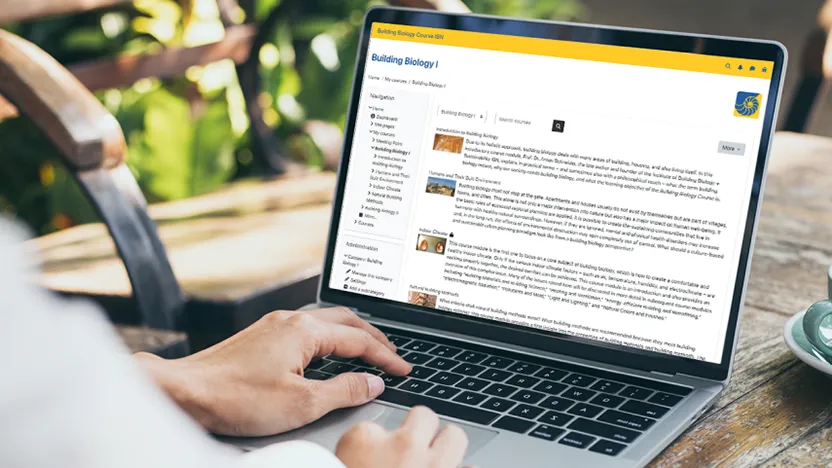
How to become a Building Biology Consultant IBN?
Newsletter

„Aktuelles aus der Baubiologie“
Die Baubiologie entwickelt sich stetig weiter: neue Erkenntnisse aus Praxis und Wissenschaft, innovative Materialien, Methoden und Projekte, spannende Veranstaltungen und Publikationen ... Wir bleiben dran und bündeln die interessantesten Neuigkeiten monatlich in unserem kostenlosen Newsletter.Nachhaltig weiterbilden
Know-how, Zusatzqualifikationen und neue berufliche Möglichkeiten für Baufachleute sowie alle, die sich für gesundes, nachhaltiges Bauen und Wohnen interessieren.
Unser Kompetenz-Netzwerk
Hier finden Sie unsere qualifizierten Baubiologischen Beratungsstellen und Kontakte im In- und Ausland nach Standort und Themen sortiert.
Über die Baubiologie
Die Baubiologie beschäftigt sich mit der Beziehung zwischen Menschen und ihrer gebauten Umwelt. Wie wirken sich Gebäude, Baustoffe und Architektur auf Mensch und Natur aus? Dabei werden ganzheitlich gesundheitliche, nachhaltige und gestalterische Aspekte betrachtet.
25 Leitlinien
Für einen schnellen, aufschlussreichen Überblick haben wir in 25 Leitlinien der Baubiologie die wichtigsten Parameter herausgearbeitet, sortiert und zusammengefasst. In 15 Sprachen, als PDF oder als Plakat erhältlich.

























0 Kommentare